
The Hidden Cost of Untracked Leads: How Data Gaps Hurt Growth
If you’re running a home service business, this probably sounds familiar.
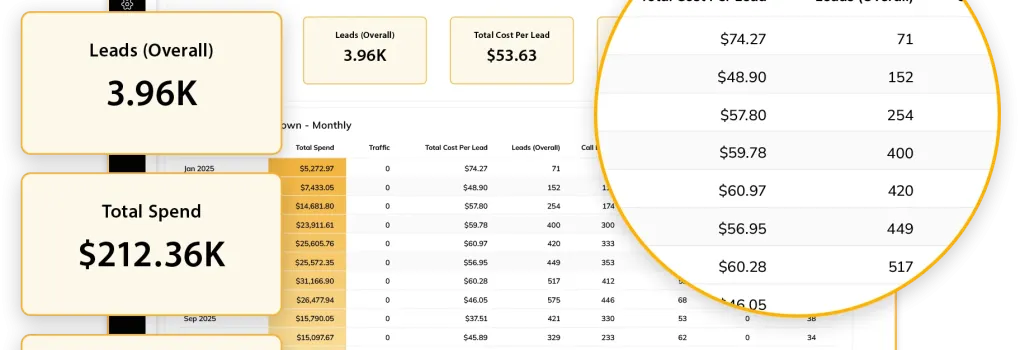
Marketing reports look strong. Lead volume is up. Cost per lead is down. On paper, things appear to be working.
But day to day, it doesn’t feel that way.
Routes aren’t filling the way you expected. The office isn’t seeing the surge the report suggests. Revenue hasn’t moved in lockstep with “great” marketing performance.
You’re left wondering which numbers to trust — the marketing report in front of you, or what the business is actually experiencing.
For most owners and GMs, the issue isn’t that marketing isn’t performing. It’s that not every lead is being tracked or connected to revenue, creating a gap between reported success and real-world results — and that gap quietly drives the wrong decisions.
The Problem Most Operators Don’t See
On the surface, everything seems fine. You have call tracking. You have a CRM. You have marketing reports showing leads and spend.
But behind the scenes, those systems often aren’t fully connected.
Here’s what that looks like in day-to-day operations:
- Calls come in, but aren’t tagged or logged correctly
- Webform leads get handled outside the CRM
- Some inquiries are marked “bad” without clear criteria
- Marketing reports one lead count, the office experiences another, and revenue tells a third story
None of this happens because teams aren’t trying. It happens because no one owns the full lead lifecycle — from first click to booked job.
Marketing can only report on what it sees.
Operations focuses on answering calls and keeping the day moving.
And leadership is left reconciling conflicting numbers with gut feelings.
The result? Marketing starts to feel disconnected from how the business actually runs.
Why This Matters More Than It Seems
Untracked leads don’t just create messy reports. They change how decisions get made.
When visibility breaks down:
- Marketing spend looks inefficient — even when it isn’t
- High-performing channels get reduced or cut
- Sales and marketing start pointing fingers
- Scaling feels risky instead of predictable
Over time, confidence erodes. Owners stop trusting the data and default to instinct. And while experience matters, growth decisions made without clear data are harder to repeat and harder to defend.
The real cost isn’t just missed leads. It’s missed clarity.
Untracked Leads Don’t Disappear — They Distort Reality
Every lead costs something. Whether it comes from paid search, local service ads, generative search, or your website, there’s spend behind it.
When a lead isn’t tracked properly, it doesn’t disappear — it creates blind spots. Marketing performance can look strong on paper, while revenue and booked jobs lag behind what the report suggests.
ROI appears healthier than it actually is. Cost per lead looks efficient. And leadership is left making decisions based on activity metrics that aren’t fully connected to outcomes.
On the ground, the office doesn’t feel the same momentum. Routes don’t fill as quickly as expected. Revenue doesn’t move in step with “great” marketing results.
Now there are two versions of reality — and neither side is wrong. They’re just seeing different parts of the picture.
You can’t accurately judge marketing unless it’s directly connected to how leads are qualified, handled, and turned into revenue.
Lead Quality Is an Operational Issue, Not Just a Marketing One
Lead quality is often talked about as if it starts and ends with where the lead came from. But in reality, quality is shaped just as much by what happens after the first call or form submission.
How quickly calls are answered.
How inquiries are qualified.
How consistently outcomes are recorded.
All of those factors influence whether a lead turns into revenue — and how it’s perceived in reporting.
When marketing data isn’t connected to these day-to-day workflows, it’s easy for good leads to be mislabeled or misunderstood. When operations and marketing share context, lead quality becomes clearer, more measurable, and easier to improve over time.
The strongest results come when marketing operates as an extension of the internal team — aligned with sales and operations, accountable to outcomes, and grounded in how the business actually runs.
This is when “lead quality” becomes measurable instead of subjective.
Revenue-Level Visibility Changes the Conversation
Lead volume alone doesn’t drive growth. Revenue does.
When leads can be connected to booked jobs and actual revenue, conversations change.
Operators stop asking:
- “How many leads did we get?”
And start asking:
- “Which leads turned into real customers?”
- “Where should we confidently invest more?”
- “What’s actually driving growth year over year?”
Revenue-level visibility replaces opinions with evidence. It gives leaders the confidence to scale what’s working — and fix what isn’t — without guessing.
What to Look At Right Now
You don’t need to overhaul everything overnight. But it’s worth stepping back and asking a few honest questions:
- Do marketing reports reflect what your office experiences day to day?
- Can leads be followed from first contact to booked revenue?
- Are marketing and operations looking at the same numbers?
- Does your marketing partner understand how your business actually runs?
These questions aren’t about blame. They’re about alignment.
When marketing data matches operational reality, decisions get easier.
The Bigger Picture
Marketing works best when it isn’t treated as something external to the business.
When data flows cleanly between marketing, sales, and operations:
- Spend works harder
- Teams stay aligned
- Growth becomes more predictable
The goal isn’t more dashboards or more reports. It’s fewer blind spots.
When you can see the full picture, you gain leverage — not just in marketing, but in how confidently you run the business.
The Cost of Not Knowing
Every month, decisions are being made based on the data available.
When leads go untracked, the cost shows up quietly — in uncertainty, misalignment, and missed opportunity. Seeing the full picture now matters more than waiting until things slow down or problems become obvious.
Clear data doesn’t just support growth.
It makes growth something you can plan for — not hope for.