
Will Launching a New Website Hurt Your Google Rankings?

What Actually Happens (With Real Examples From Pest & Lawn Businesses)
Many pest control and lawn care business owners hesitate to launch a new website because they’ve heard warnings like:
“Don’t launch a new website during your busy season.”
“Wait until winter, or you’ll lose visibility when you need it most.”
This advice sounds cautious, but in practice, it often costs businesses valuable visibility during their most important sales months. When a new website is planned and launched correctly — with better structure, clearer services, and an improved experience for customers — rankings do not need to decline. In many cases, visibility improves within weeks. Below, we’ll address common industry myths, explain what actually happens, and show real examples from pest and lawn care businesses that launched new websites without sacrificing performance.
Myth #1: “You shouldn’t launch a new website during peak season”
What people believe: Launching a new website in spring or summer will hurt rankings right when leads matter most.
What actually happens: Google does not penalize businesses for launching a new website during peak season.
Google focuses on understanding:
- What services you offer
- How clearly pages are organized
- Whether customers can easily use the site
If those signals are clear, Google adjusts quickly regardless of the time of year. In fact, waiting to launch can introduce a different risk: carrying a weaker website through your highest-demand months. If your current site is:
- Slow
- Difficult to use on mobile
- Unclear about services
- Not converting visitors into calls
Then delaying a better website means missing opportunities when demand is already high.
Real Example: ProfExt Pest Control Services
New website launch focused on structure, usability, and clarity
The ProfExt example shows why timing alone shouldn’t dictate decisions.
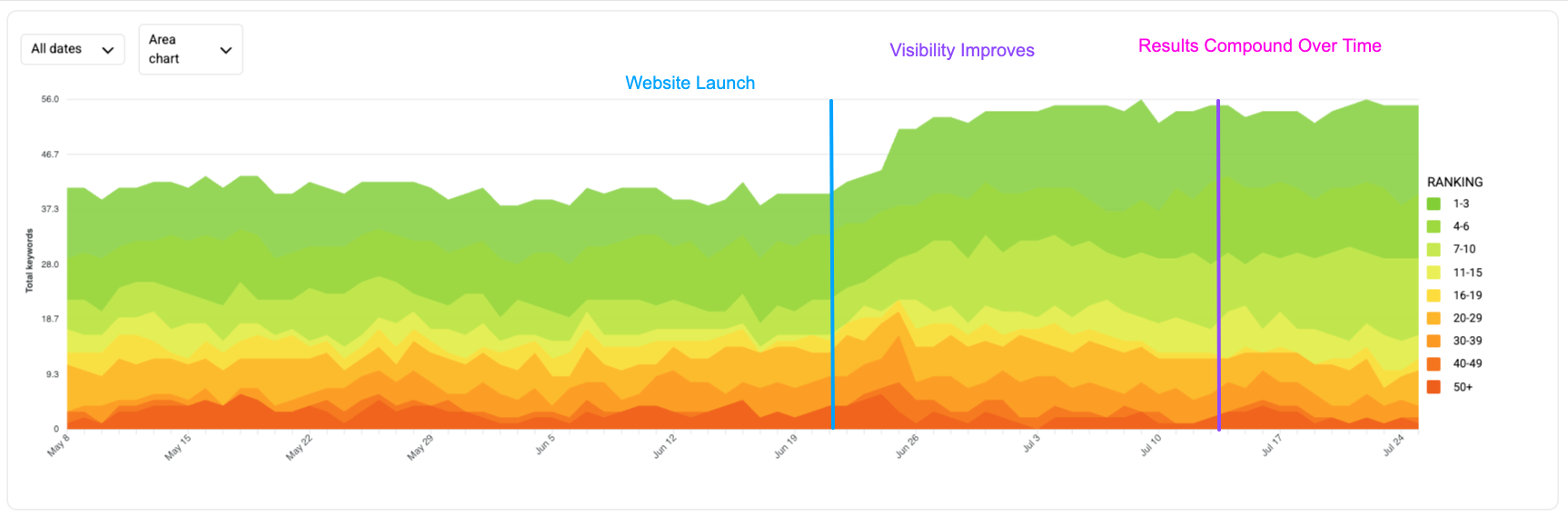
📈 What the chart demonstrates:
- The blue line marks the new website launch
- Visibility improves immediately afterward
- Results continue to build in the weeks that follow
There is no drop tied to launching during an active season. Instead, the improved website gains traction while customer demand is already strong.
Key takeaway for business owners: Waiting would not have protected visibility — it would have delayed growth.
Launching a new website during peak season does not cause ranking loss. Delaying a better website can mean missed visibility, leads, and revenue when demand is highest.
Myth #2: “Some ranking loss is inevitable when launching a new website”
What people believe: Even a well-planned new website must hurt rankings before things improve.
What actually happens: Ranking losses are not part of the normal process.
When losses do occur, they’re almost always tied to specific issues, such as:
- Important service pages being removed or merged incorrectly
- Old pages not clearly leading to their new versions
- Navigation changes that make key services harder to find
When those problems are avoided, rankings often hold steady — or improve.
Real Example: Turf Care Enterprises
New website launched with clearer structure and improved user experience
After launch, Turf Care Enterprises did not experience a decline in visibility. Instead:
- Rankings improved shortly after launch
- More keywords moved into top positions
- Gains remained stable well beyond 90 days
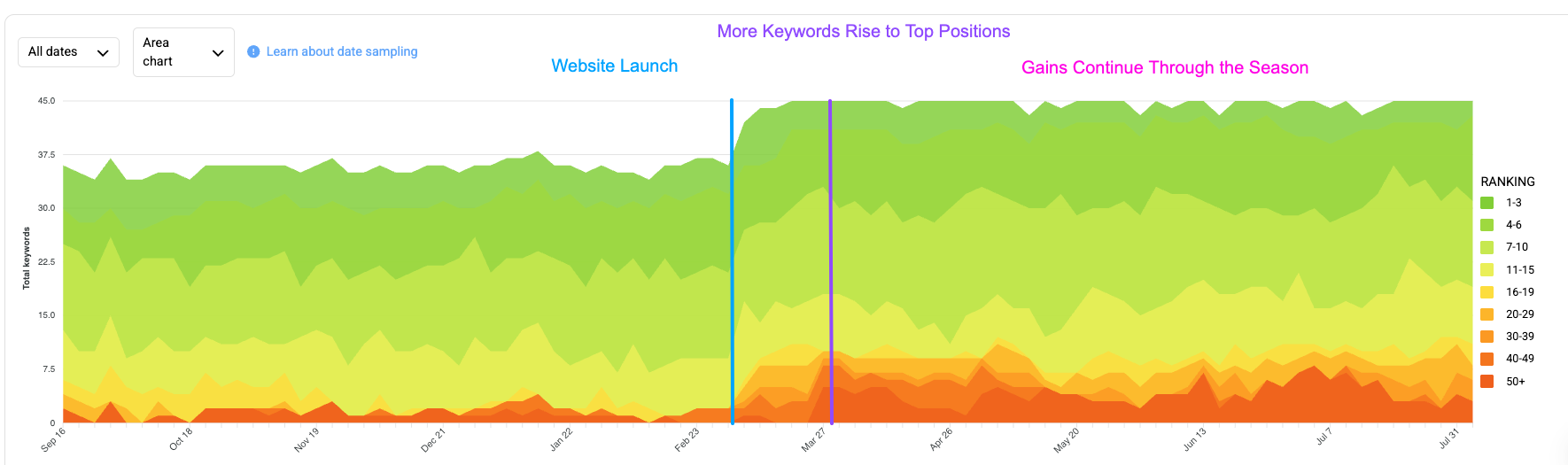
📈 What the chart shows:
- The vertical blue line marks the new website launch
- Visibility improves immediately afterward
- No prolonged dip or recovery period appears
Key takeaway: This new website didn’t reset performance — it strengthened it.
Myth #3: “Google has to ‘re-learn’ your business after a new website launch”
What people believe: Launching a new website resets trust.
What actually happens: Google looks at business continuity, not visual design.
If your business name, services, location, and website address remain the same, trust carries forward. A new website doesn’t erase your history — it improves how clearly your business is presented. Faster load times, clearer service pages, and a better mobile experience often make it easier for Google to understand what you offer.
Real Example: PestBear
New website launched with clearer organization
PestBear’s results follow the same pattern:
- Rankings improved shortly after launch
- More keywords entered top positions
- Visibility continued to grow over time
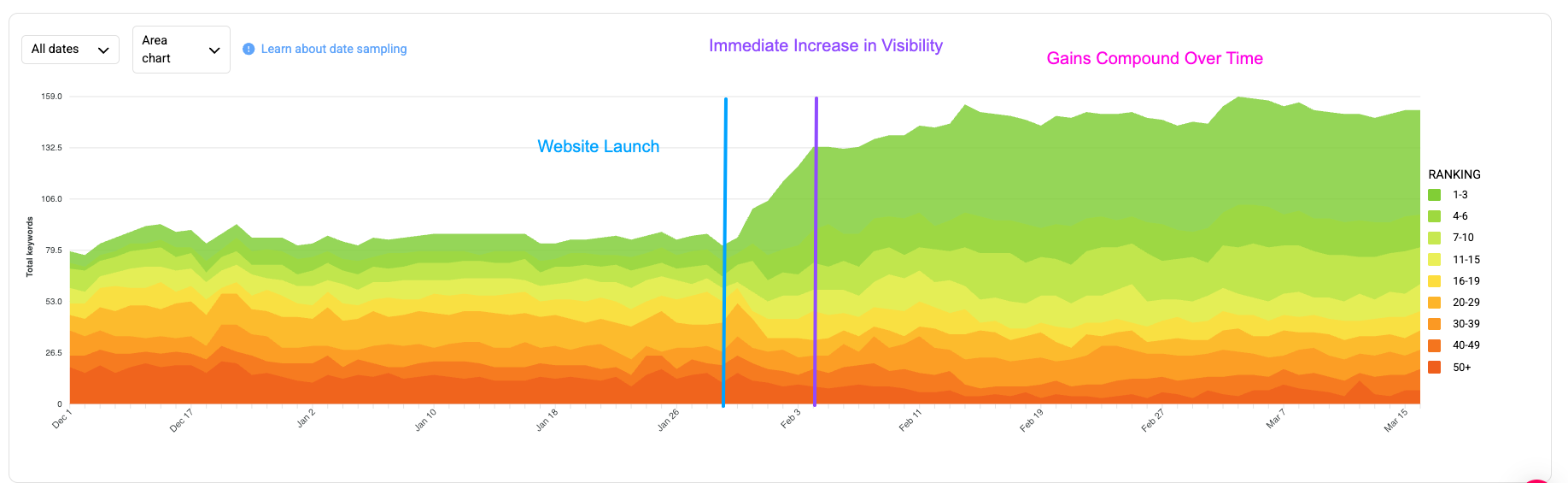
📈 What the chart shows:
- No launch-related decline
- Upward visibility trend soon after launch
- Results compound rather than stall
Key takeaway: This wasn’t luck. The new website made the business easier to understand — for customers and for Google.
Myth #4: “Any ranking movement after launch means something went wrong”
What people believe: Rankings should stay perfectly flat after launching a new website.
What actually happens: Some short-term movement is normal.
After launch, Google revisits pages, confirms updates, and fine-tunes placement. For most service-based businesses — especially those with fewer than a couple of hundred pages — this adjustment period is brief. The important distinction:
- Short-term movement = normal adjustment
- Sustained losses = something to fix
Waiting alone doesn’t resolve real issues, but well-planned launches typically avoid them altogether.
What Successful New Website Launches Have in Common
Across pest and lawn care businesses we’ve worked with, smooth launches consistently share a few traits:
- Every important old page clearly leads to its new location
- Core services are easy to find and understand
- Navigation is simpler, not more complicated
- Nothing valuable disappears overnight
- Testing happens before the site goes live
When these fundamentals are respected, Google adapts quickly.
What This Means for Pest & Lawn Business Owners
A new website should feel like a step forward — not a risk. If you’ve delayed upgrading your website because you were told:
Wait until the slow season, or you’ll hurt your rankings.
The data doesn’t support that advice. In many cases, waiting means:
- Carrying an underperforming website through your busiest months
- Missing opportunities when demand is highest
- Delaying improvements that could compound over time
The ProfExt, Turf Care Enterprises, and Pestbear examples aren’t exceptions. They’re repeatable outcomes when new websites are launched intentionally.