
SEO for Lawn Care Companies: The Guide to Local Success

The days of customers finding your lawn care business in the Yellow Pages are over. Online search is king, with Google dominating: 97% of users search online to research local services. The rules have changed, so how can your lawn care company keep up? Implementing an SEO (search engine optimization) strategy can help your lawn care company reach more customers online and gain a competitive advantage.
What is SEO, and Does My Lawn Care Business Need It?
Simply put, a solid SEO strategy puts your company’s website in front of local users who are searching for terms related to your services. Pretty important, right?
So, where do you start? Overall, the goal of most lawn care companies is to rank higher on Google so potential customers can easily find them. While it’s clear that the importance of an SEO strategy for your lawn care company, few people know where to begin or what to do. There are a few main factors that go into getting your website and content noticed by search engines and potential customers:
- Google Business Profile
- Citations
- Keywords
- On-site SEO
- Off-site SEO
- Citations
Why are each of these essential to a successful SEO campaign? We will dive into each topic and explain how to make the most of it.
Google Business Profile for Lawn Care Companies
Local SEO relies heavily on Google Business Profile (formerly Google My Business), which has become increasingly prominent in search results. If you have ever searched for a service on Google and noticed a pack of three companies on the page, each with a map showing their locations, this is known as a “map pack.” Having your business appear in this local map pack is ideal. The key to making that happen is to optimize your Google Business Profile page by providing customers with helpful information and showing Google that you are an honest company.
- Description: A brief, simple explanation of who you are and what you do.
- Services: Be sure to list the products or services your company offers—in this case, lawn care. Google Business Profile allows you to add primary and secondary services, so get specific with your specialties: fertilization, tree care, lawn maintenance, etc.
- Hours: It’s essential to list your hours of operation and ensure they are accurate.
- Images: Personalized photos of your company give visitors a clear sense of what you’re all about.
- Service Area Business: Be sure to mark your business as a service area business that serves customers on-site.
- Reviews: One of the most critical aspects of GMB is the reviews your company receives from customers. Reviews play a big part in rankings. The more positive reviews you receive, the more Google will recognize you as a trustworthy company.
Continuously updating each of these whenever your company undergoes changes is extremely important and shows customers and Google that you’re working hard to provide excellent service.
Citations and How They Help
Citations are mentions of your business on the internet. Most citations should include the name, address, and phone number of your business, otherwise referred to as NAP. Citations must be identical across all platforms and websites to ensure consistency when site crawlers crawl the internet. If the citations do differ in each location, Google will get confused, and your local SEO strategy won’t be as complete.
By getting your company’s information out on several sites, you not only create awareness for your business, but you also show Google that your business is a legitimate company. To get a handle on citation building, you can look into these tools and providers:
Keywords for Lawn Care SEO
Your local SEO campaign and overall landscaping SEO strategy focus on the words and phrases people search for to find your type of business and services; the keywords you target are essential. Doing keyword research is an integral part of your local SEO campaign.
One great way to start your keyword research is to check out your competitors and see what they are targeting. Say you have a lawn care company in Las Vegas. If your competitors are using keywords like “lawn fertilization Las Vegas, NV,” you know people are searching for that service.
Another effective way to identify relevant keywords is to use tools such as Google Keyword Planner, Moz, or SEMrush to research what your customers are searching for. Once you identify them, effectively incorporating your keywords into your content is the tricky part, which brings us to how you can optimize your on-site SEO.
On-Site SEO for Lawn Care Companies
On-site (on-page) SEO, which optimizes content on your website, is critical to an effective SEO campaign. What must be optimized?
- Title tags
- Meta descriptions
- URLs
- H1’s and H2’s
- Images
- Content
Let’s dive into the importance of each.
Title Tags
Title tags must be on each significant page of your site. The title tag is the blue text you see in Google search results that explains what the page is about. Ensure your title tag is clear, relevant to the page content, includes the correct keyword at the beginning, and is attention-grabbing. Title tags should average between 50 and 70
Meta Descriptions
A meta description is that little blurb underneath a title tag in search results, explaining what your page is about in 160 characters or fewer. Be sure to include the targeted keyword in your description to encourage more clicks.
URLs
When creating URLs for your pages, make sure they make sense and include some keywords; nobody wants to look at a URL that’s just a string of random numbers and letters.
For example, if you have a page dedicated to your aeration and overseeding services, make your URL something like this: www.domain.com/aeration-and-overseeding-services, so visitors can see that the page is about the specific service they are looking for. Clean. Focused. Descriptive. It’s as simple as that.
H1s and H2s
The H1 tag is the most crucial element on your lawn care website’s key pages; it serves as the page title and heading. It should be concise and include your target keyword. Lawn care companies typically have many pages explaining the services they offer and the areas they serve, so ensuring each H1 targets the exemplary service and area can help attract more visitors.
While H2s aren’t as crucial as H1s, they are still necessary. No one wants to read a large block of text, and that’s where H2s come in; they’re designed to break up the content and explain your specific services in more detail.
Images
While it’s always important to include relevant images on each page, it is even more important to optimize each image with a title and alt text. When you hover over an image and a little box appears describing the photo, that is the image title tag. Alt tags, on the other hand, will appear inside the image container when the image cannot be displayed. These are important for many reasons, the main one being that they help screen readers enable visually impaired visitors to understand what the pictures depict.
Content
Yes, content. It seems so obvious, yet many don’t put in the effort to write quality pages. For your pages to succeed, they must be informative and provide value. Make sure your content engages the reader. When it comes to your lawn care company, write a bit about the history of the company, maybe include some information about the town you are serving, and then explain in detail the services you provide. On a page about fertilizing, write about the ways you can help customers grow beautiful lawns. Do you use a traditional herbicide or a mineral-based fertilizer? This is the type of information both readers and Google find essential. Google wants to know you aren’t just writing to trick the search engines, you are writing to help your customers & website visitors find what they’re looking for.
Scatter keywords throughout the content, and ensure your meta tags are written cleanly. Within your content, be sure to link to other pages on your site that provide valuable information. This is called “internal linking.” If you have a page on your site dedicated to residential lawn care, that content might include the types of lawn services you offer homeowners. If you mention aeration in the content, link to your aeration page to help users navigate your site more easily!
It is crucial to optimize your site continuously. Although on-site SEO is imperative, you can also help your site climb the rankings off-site.
Off-Site SEO for Lawn Care Companies
Off-site SEO, also known as off-page SEO, refers to the strategies and actions taken outside your website to improve search rankings. Here are a few things you can focus on:
- Backlinks
- Guest Posting
- Social Media Promotion
Although it may seem there aren’t many off-site factors, each element carries significant weight. Let’s dig deeper:
Backlinks for Local Lawn Care Businesses
A backlink occurs when another website, not owned by you, links to your site. For example, if a blog post covers grub control and your site offers high-quality content on the topic, the author may link to your site so readers can learn more. To get backlinks, lawn care companies should reach out to the following:
- Industry Publications
- Look for top lawn care publications. While building relationships with these publications can help you get a link, another way is to provide quality content, such as an informational blog on the field.
- Local Publications
Whether it’s a local news network, newspaper, or even magazine, getting a link from a local outlet shows Google that you are a credible company in the community.
- Local Organizations
- If you are a part of any local organization, having them link out to your site would be another excellent form of backlink.
Guest Posting
Guest posting: Are you writing for another publication? If you create quality content with your company’s name attached to it, search engines will recognize this, and so will potential customers. Even better, you might reach people who might otherwise never have found your company.
Social Media Promotion for Lawn Care
Social media has become a significant part of business, especially in local lawn care SEO. You can use your social media accounts to promote quality content on your site, community events your company participates in, or personalized photos of your employees out in the field.
Social media is free online advertising, and doing it right can make a big difference. Raise awareness for your business in any way possible, but don’t just tweet or post anything. Make sure the content you publish is valuable and reflects what your business is genuinely about.
It’s A Lot of Work
SEO differs across industries and markets. Lawn care SEO differs from eCommerce SEO, which differs from HVAC SEO, and so on. The tips above are a great way to start a solid SEO campaign for a local lawn care company. It’s imperative to be mindful of each tactic when developing your site strategy, as your campaign will be stronger when all the cylinders are firing.
Fortunately, Coalmarch has extensive SEO expertise, particularly in the lawn care industry. We’ve worked with lawn care companies across the country, helping them grow through complete digital marketing campaigns and measure their ROI. If you don’t want to spend hours creating a successful SEO strategy for your local business, contact us today, and our SEO Specialists will do what they do best – help your company flourish.
Looking beyond SEO? Discover emerging marketing trends, including AI search and agentic booking, in our comprehensive evergreen guide to home services industry trends.
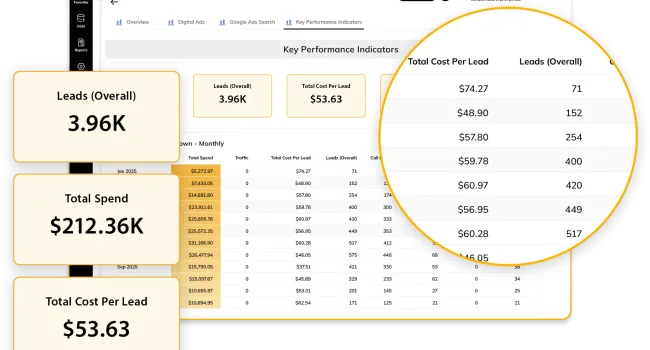

Marketing your home services business without tracking ROI is like driving with your eyes closed. Every dollar you invest in digital marketing should drive measurable results but most pest control and lawn care companies struggle to connect their marketing spend to actual revenue - especially in a rapidly changing digital environment where AI-driven search results and zero-click conversions make it even more difficult to see the full story of your ROI.

Marketing your home services business without tracking ROI is like driving with your eyes closed. Every dollar you invest in digital marketing should drive measurable results, but most pest control, lawn care, and HVAC companies struggle to connect their marketing spend to actual revenue.